

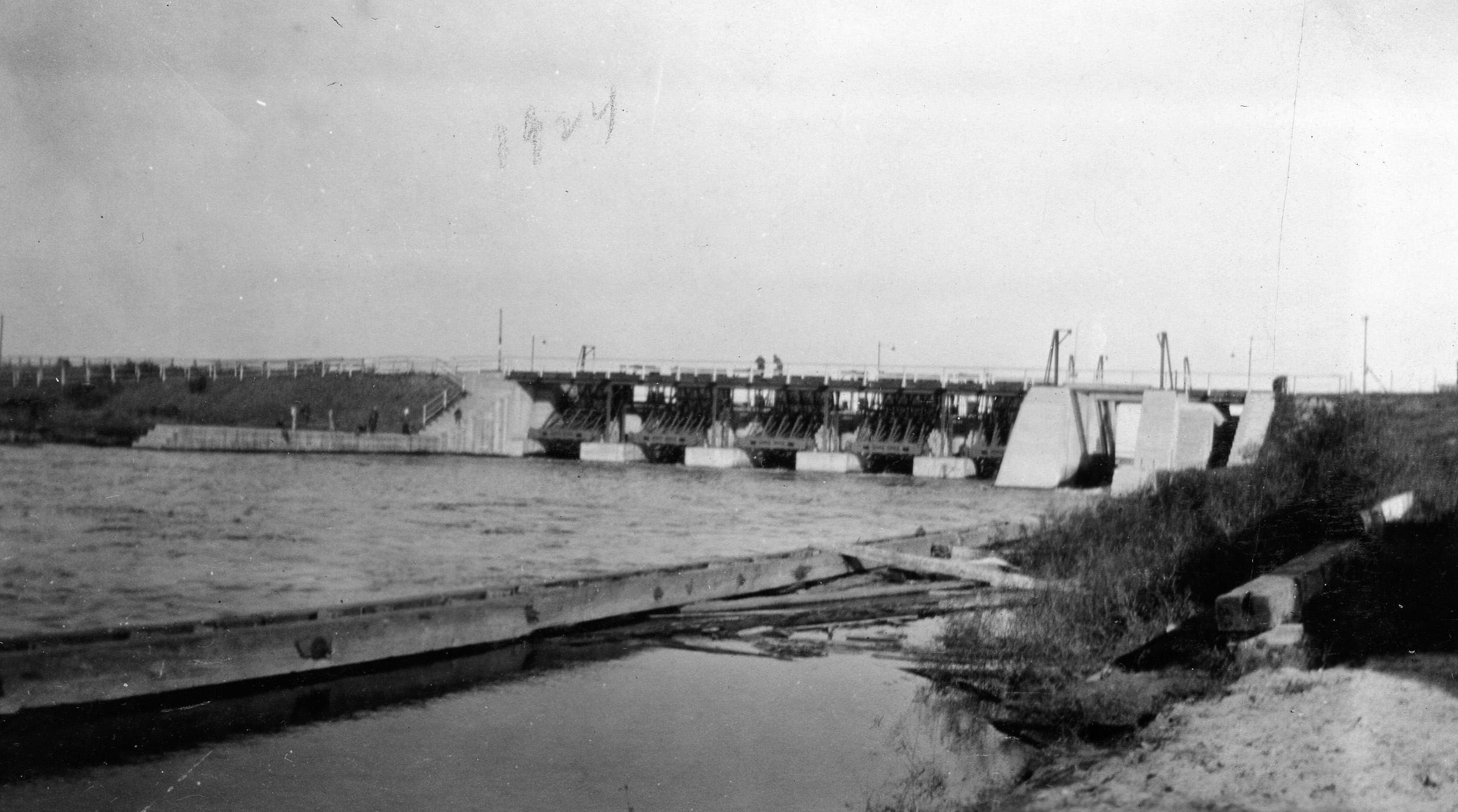
Winnibigoshish Dam
Concern over the erratic flow of the Mississippi River led to proposals as early as 1852 for a series of dams in the Mississippi Headwaters Region. In 1870, the Army Corps of Engineers recommended 41 reservoirs in the region to improve navigation and to aid in flood control.
In 1880, Congress authorized the “Winnie” Dam, which created the first and largest reservoir on the Upper Mississippi. Built in 1881-84, “Winnie” Dam was a rock-filled, timber crib structure. It was replaced by the present concrete structure in 1899-1900.
It has a capacity of 42.5 billion cubic feet of water and controls the runoff from a 1,442 square mile drainage area.
Since the 1930s, the reservoirs have been regulated primarily for flood control, recreation, fish and wildlife conservation, and water supply.